

Therapy speak and mental health terms are abused in abundance as of late. I’m guilty of this at times, and I’ve come to suspect it’s in part due to possessing a limited vocabulary to express how we feel. There are hundreds of words for this in the English language but realistically, how many of those do we use daily? How many do we even know?
For example: as somebody who’s danced with lady darkness often enough, it’s easy to find myself in the trap of saying ‘I’m depressed’. While there are times where my essence feels like a crippled ghost haunting the mental prison of my brain, there are also times where I just feel bummed out or more generally speaking, ‘blah’. I’m guilty of labeling each form as depression when it’s clear that it only suits one of the two cases.
There’s gargantuan weight tied to the word ‘depression’ and using it all loosey goosey to describe my emotional states does more harm than good. If I am in a depressive cycle, I’ll say whatever the fuck I want with complete abandon, but that’s a different story for a different day as that isn’t currently the case. The emotional state I’ve been taken by recently and have learned to deeply love is the one known as languishing.
Simply put, languishing equals:
— feeling listless
— being ‘stuck in a rut/slump’
— BLAH
Or, as psychologists would call it, the absence of mental health, a state that exists between depression and flourishing. When languishing, we’re not quite weighed down by agony, nor are we fulfilled and killing it in every aspect of our lives. How could I feel deeply in love with this state? Wouldn’t I rather be flourishing? Well, sure, but when I’m languishing, I’m clearly not flourishing. I’m not suggesting we keep ourselves stuck in states that don’t work for us, but it’s worth befriending the state you’re in while you’re in it.
I used to DESPISE languishing. I’d be overcome by a sense of otherworldly boredom and just lament that I had ‘no direction’. I would still exercise, meditate, play with my dog, journal, whatever, but I’d just feel like these were preprogrammed, autopilot activities that I was doing mindlessly.
One day, while lying in my bed staring at the ceiling, as one does, a thought consumed me: I’m not having fun anymore. It was clear to me that I was living my life in a way that no longer served me. Right then and there, I whipped out my musty old lap desk, picked from one of the dozens of journals laying around my room (all emblazoned with a vaguely East Asian design), and went to work. I needed to find what was no longer working for me, and that goes for: thought patterns, relationships, goals, daily habits, you name it.
I was beginning to understand that the state of languishing could be an incredibly wise teacher for me. I’m neither battling intense pain and lethargy in depression, nor am I too busy flourishing to worry about what could weighing me down. Languishing is a great space to really sit down and evaluate how you’ve been living your life. The more I kept an open mind, the more questions, and dare I say directions, seemed to arise in my brain.
Now, as much as I’d love to just lecture about languishing as an objective emotion that’s happening over there, I’d rather take the leap and bring it up close by sharing some of languished musings.

Let’s start with a challenging one: reconsidering the sins of my father. I don’t like being back in Boston, period. I don’t love this city as much as I once did and it’s not where I see myself for any extended period of time. I’m thrilled, however, that I get to see my parents much more often. There’s a bizarre feeling deep in my gut that this is the last time I’ll be able to be around them this much and I should absolutely cherish it.
I do cherish it, I really do, but if you’ve read my previous works (I won’t be rehashing it all), you’ll know I’ve always had a complicated relationship with my father.
A relationship with what I’ll call a ‘reformed abuser’ is beyond complicated. He’s been nothing but caring, supportive, and kind to me, but that doesn’t automatically remove how easily I can become dysregulated by the slightest thing he does. I’ve forgiven him, but there’s reactions I still can’t fully control, so now I’m the asshole. Funny how that works.
My mother loves my father deeply, so she’ll always tell me about his childhood and how he was raised. The process of hearing these stories, after years, has followed this sort of progression:
I couldn’t give less of damn.
Then he should have known better
Hm… well, shit.
I reached the third stage of that progression on a day I was sitting at the dinner table with my mom. There’s nothing out of the ordinary, as far as I’m concerned, but she chose that moment to blurt out ‘your dad has such bad ADHD. When he was a kid in Damascus, his parents would tie him up with rope to the railing of their balcony and leave him there for hours because they couldn’t deal with him.’ Now, I don’t believe that anyone’s obligated to forgive anyone, especially someone who’s made your life immensely challenging, but hearing that story and the imagery of a little kid tied up outside, not knowing when (or in his mind, if) he’ll be let back inside, broke me. It wasn’t a particularly mental health forward place in 1950s Syria, so I try to remind myself that he couldn’t have gotten help even if he was desperate to heal. Sitting with this story and the intense emotions it created in me was enough to allow me to fully let it all go. I don’t have the energy to hold onto resentments anymore, and I’m glad I was able to experience this release while he’s still alive. I refuse to be the thirty-five-year-old who still blames his parents. My mental health may not be my fault, but it’s absolutely my responsibility, and I choose to move forward on a path of healing.
Next, I want to share other, perhaps less beefy, questions and musings I found myself faced with.
‘What is your plan for Substack? Is your future with the platform just as the guy who posts photos of his dog? Why are you even on here’ By posting weekly essays and being active daily on notes, I had a bit of a meteoric rise when I first started on here. The moment I stopped being as active, as consistent, I saw it all go stagnant. No new subscribers, multiple people shooting past my subscriber count, and friendships I really enjoyed slowly slipping away. It was challenging at first, but it really is a ‘you get what you put into it’ system, and I got used to the stagnation fairly quickly.
It’s easy to announce that I’m making some grand return without actually standing on business. This time around, I already have quite a few pieces prepared, and the Humble Homies video podcast’s calendar is completely booked with really exciting guests. I can’t wait to share it all with you.
Another musing that hit me particularly hard but may not resonate as much with others was: You can’t get away with this shit anymore. There’s no flashy smile to get you out of this one. It’s time to grow up.
You attach too much weight to a broken tooth. Every time you look in the mirror and see it, your mind flashes every mistake you’ve made, as if the tooth was the culmination of all your sins. It’s just a tooth, stop torturing yourself about it.
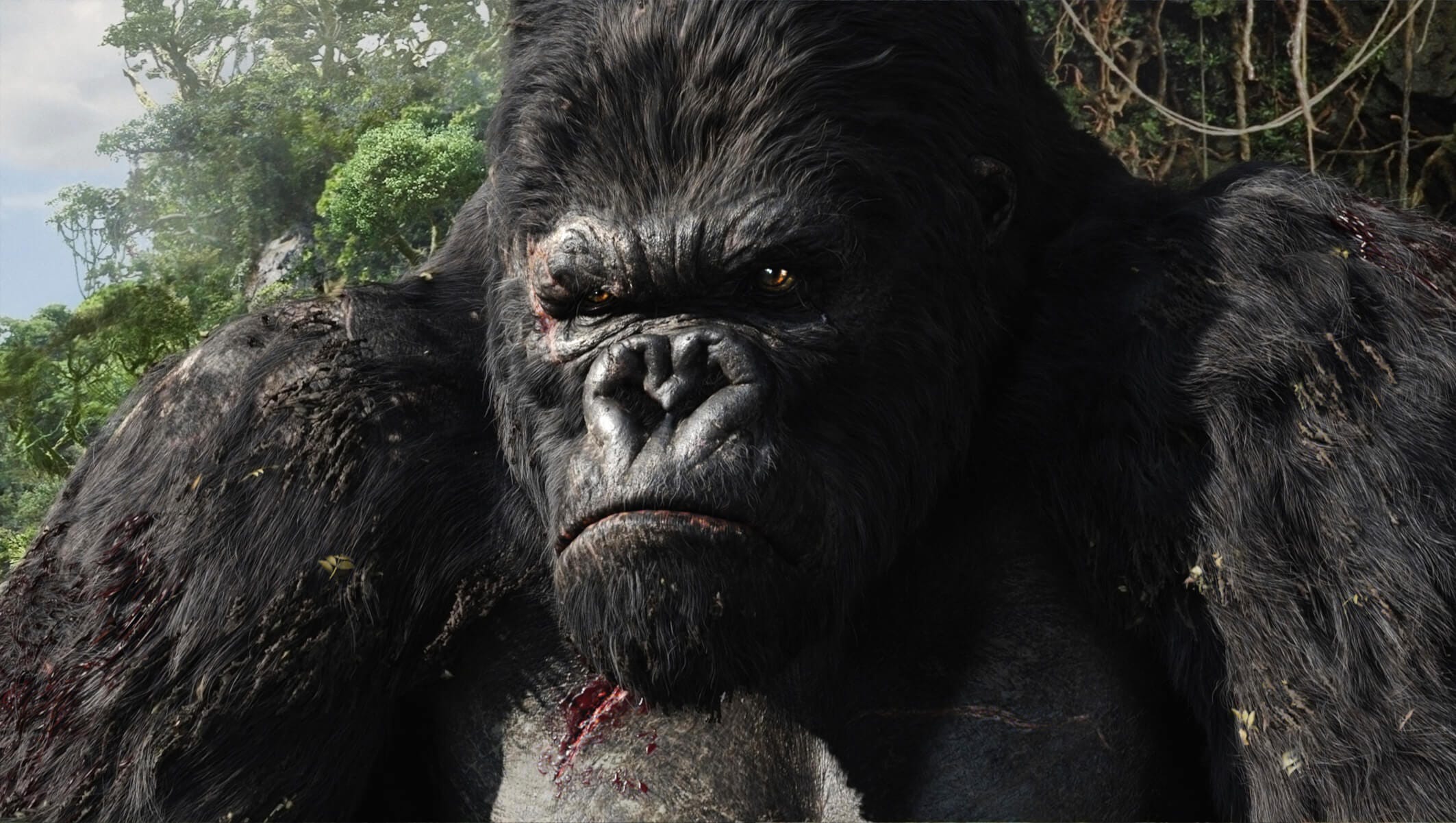
Stop waiting to befriend King Kong while he’s climbing the Empire State Building and attacking anything that comes near. Catch him when he’s docile and bring him a stack of bananas. You’ll be surprised how much your quality of life will skyrocket once you stop waiting until the chill ass monkey becomes a raging behemoth.
It’s funny to me how much I’d prefer to just write all this in a journal and lock it away. Instead, here we are, publishing it to a couple thousand people. It’s fueled by my deep desire to destroy any imagery of a person who’s flourishing 24/7. We seem to want to convince everyone of that, but it just makes everyone feel inadequate. I find male vulnerability to be particularly important and hope I can continue to lead the way whether I’m curled up in a ball of depression, languishing with the best of them, or flourishing to my heart’s content.
What’re some common thoughts that pop up for you while languishing? How do you deal with this state? Would love to hear your takes in the comments below!
These are important musings.
I just read your post for a second time. It’s very well written. When I languish, which I seem to be doing a lot lately, I think of the time that I have left on this earth. Realistically, about ten to fifteen years. What will I do with my final glide pattern before I land? How will I be remembered, and by who, and for how long? Does it even matter? I suppose it’s the little interactions that can make subtle, almost imperceptible, changes in someone. Changes that can affect generations, as you have been affected by your father.